
Details of the New Features
1. Threat Intel (CTI) – BETA
Stolen identity remains the primary attack vector for enterprise breaches. Today's cybercrime ecosystem relies heavily on infostealer malware logs, database dumps, and illicit marketplace trading to facilitate unauthorized access and bypass perimeter defenses.
To address this critical exposure point, Zanshin has introduced Threat Intelligence capabilities, with its initial release laser-focused on Leaked Credentials.
For First Parties: Navigate to the "FOLLOWING" section in the left-hand vertical menu and select "Threat Intel". The screen below will be shown.
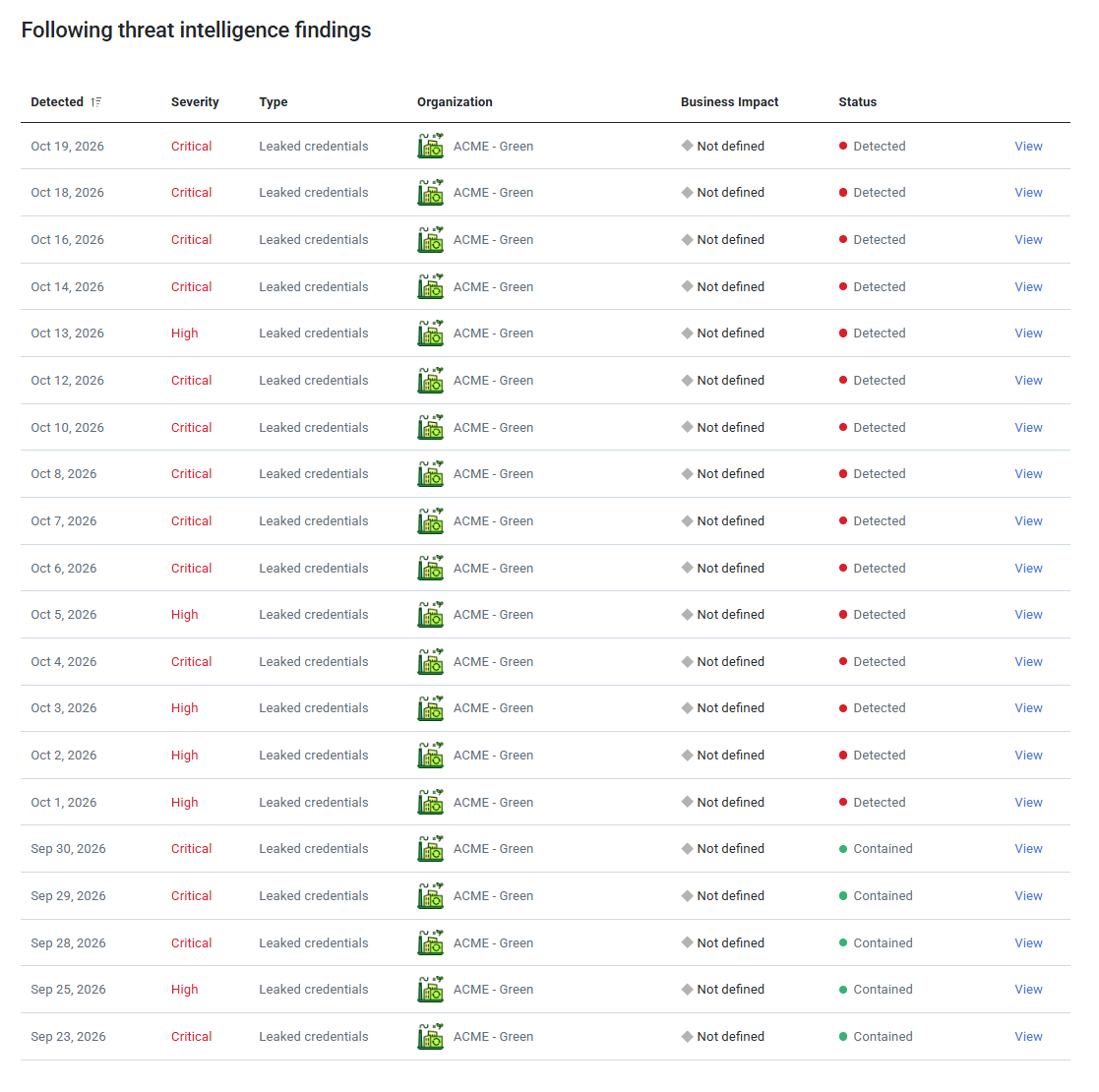
Each finding provides key risk details at a glance: detection date, severity level, finding type, affected organization, business impact, and current remediation status.
For Third Parties: Navigate to the "MY ORGANIZATION" section in the left-hand vertical menu and select "Threat Intel". The screen below will be shown.
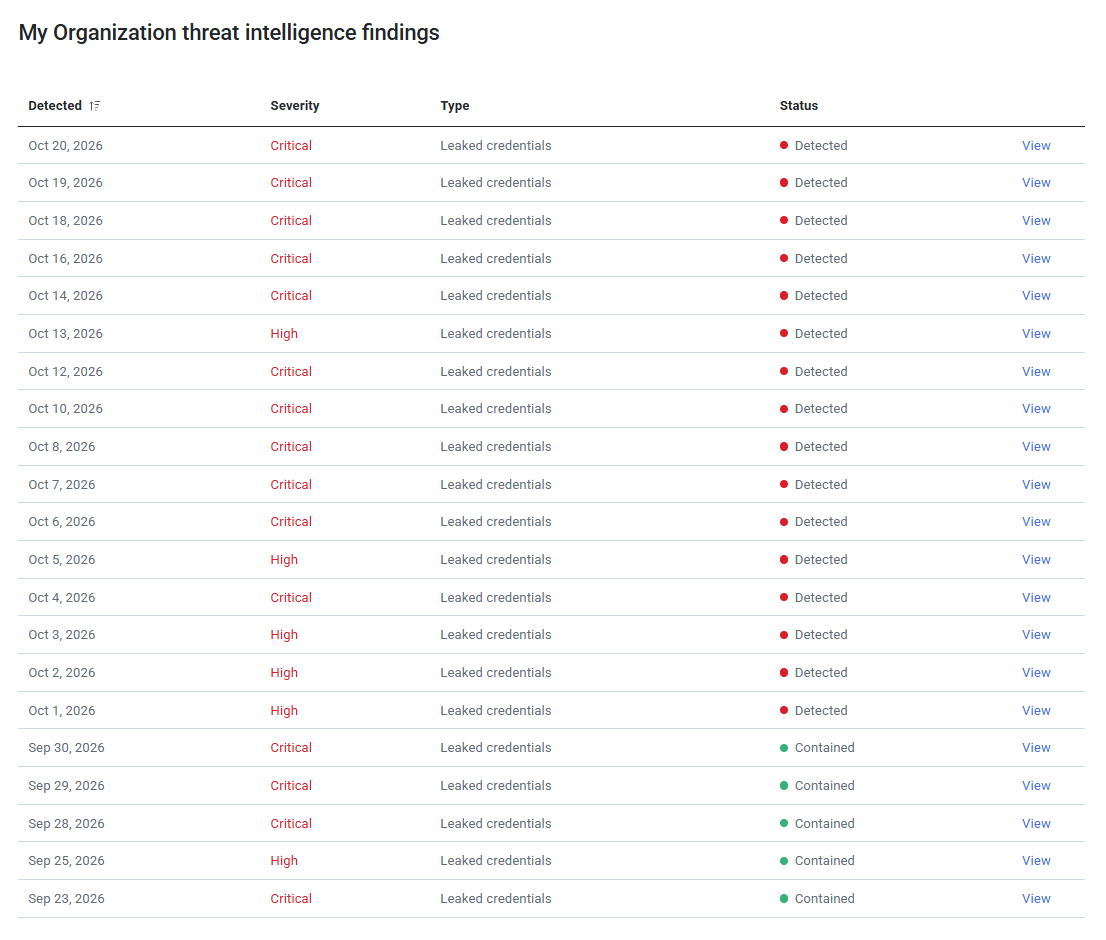
Each finding provides key risk details of your organization at a glance: detection date, severity level, finding type, and current remediation status.
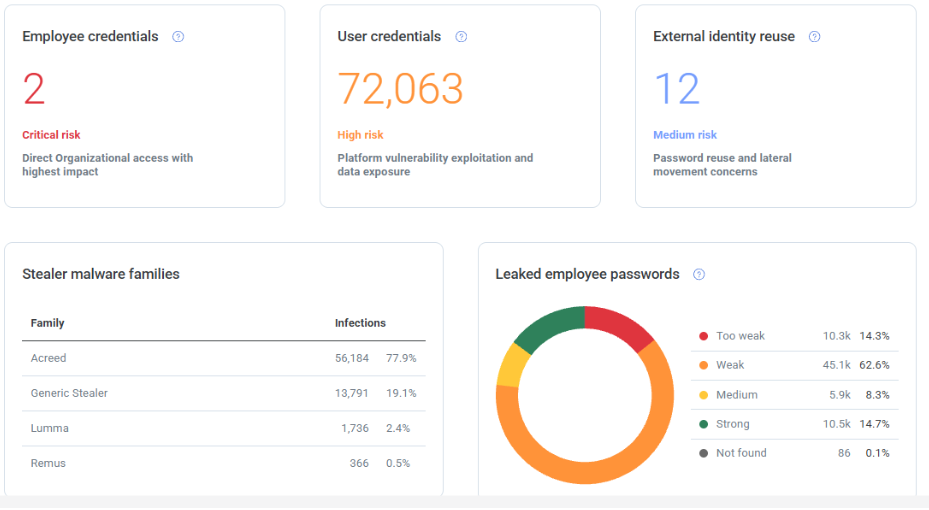
Summary cards displays the number of credentials found, categorized by risk level:
- Critical risk: Employee credentials used to access their own corporate systems.
- High risk: Employee credentials found on unrelated external websites or services.
- Medium risk: Personal credentials used to access corporate applications or services.
2. SAQ improvements
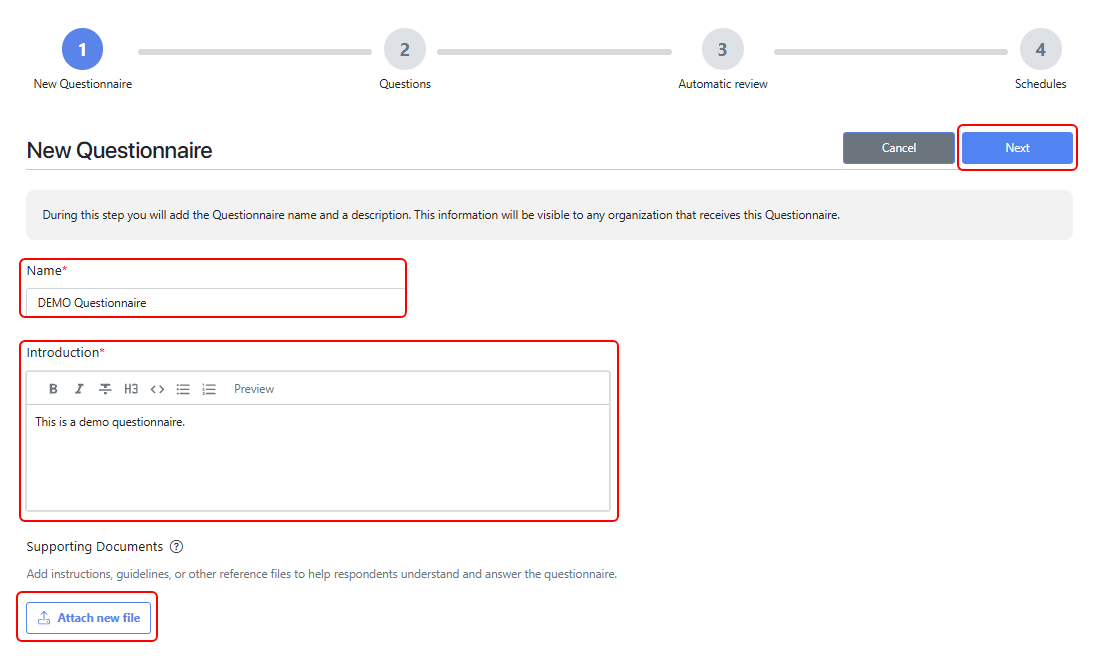
- Support Documents: When you create or edit a questionnaire now you can additionally attach files. These are reference documents, such as instructions or guidelines, to help respondents to understand and answer the questions.
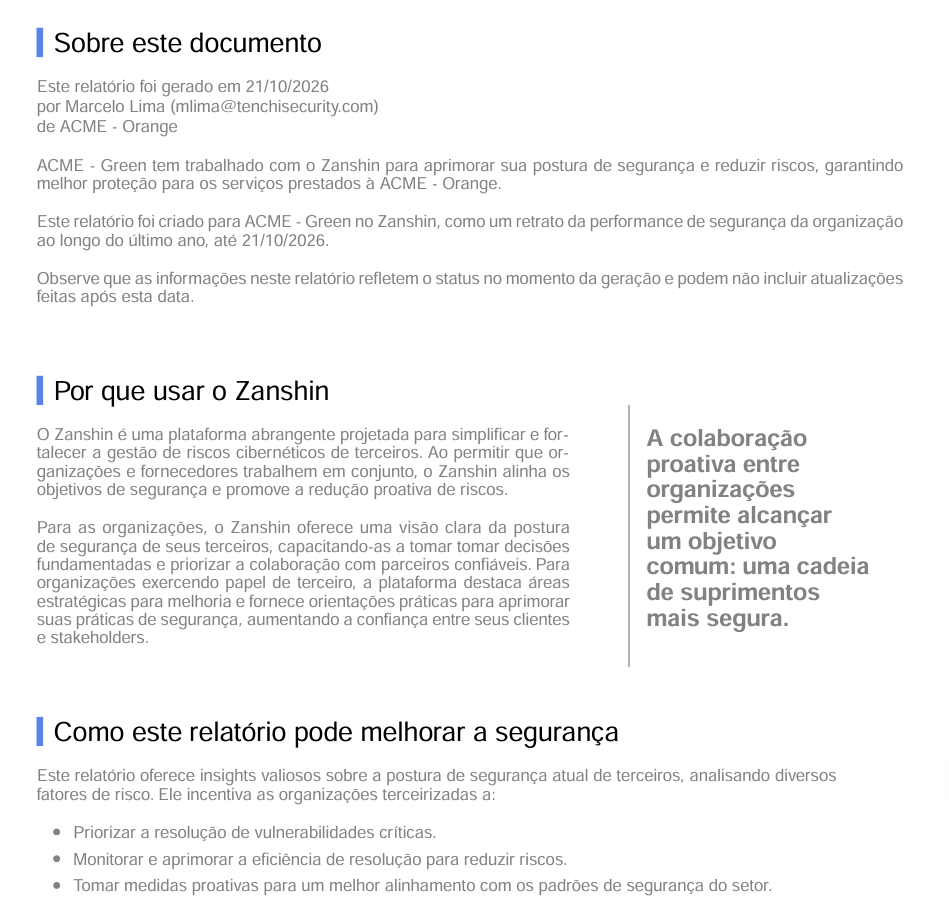
- Portuguese Reports: Self-Assessment Reports are now available in Portuguese (pt-br).
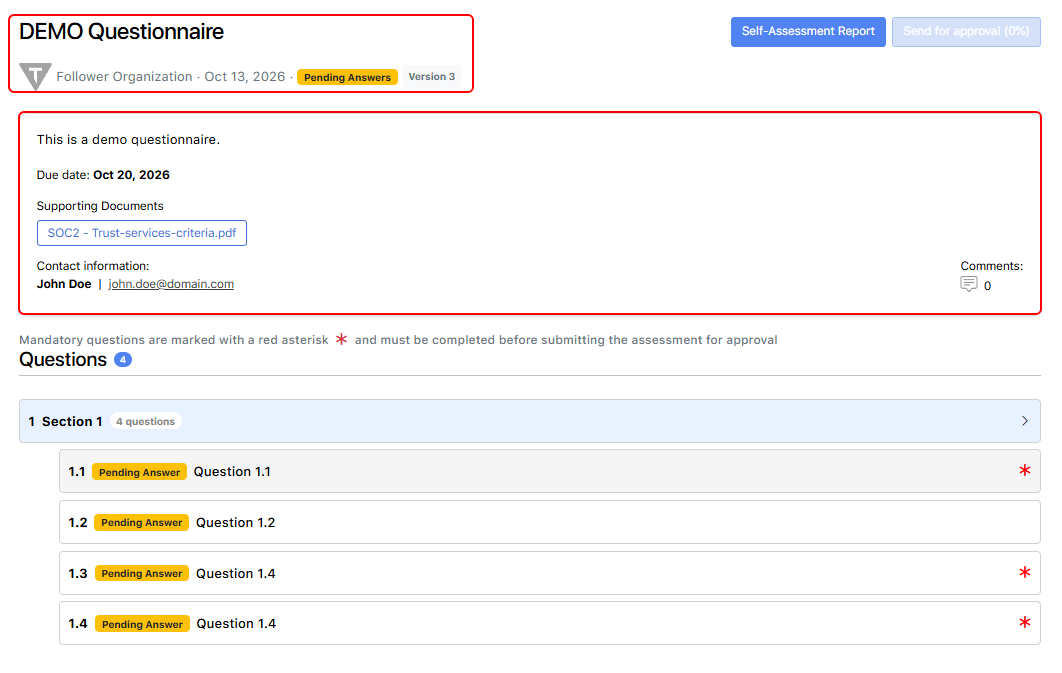
- Enhanced Assessment Visibility: The Assessment header now displays the requester’s logo, making it immediately clear to third parties which follower organization sent the assessment and will receive their responses.
3. Expanded Capabilities for Risk Assessment
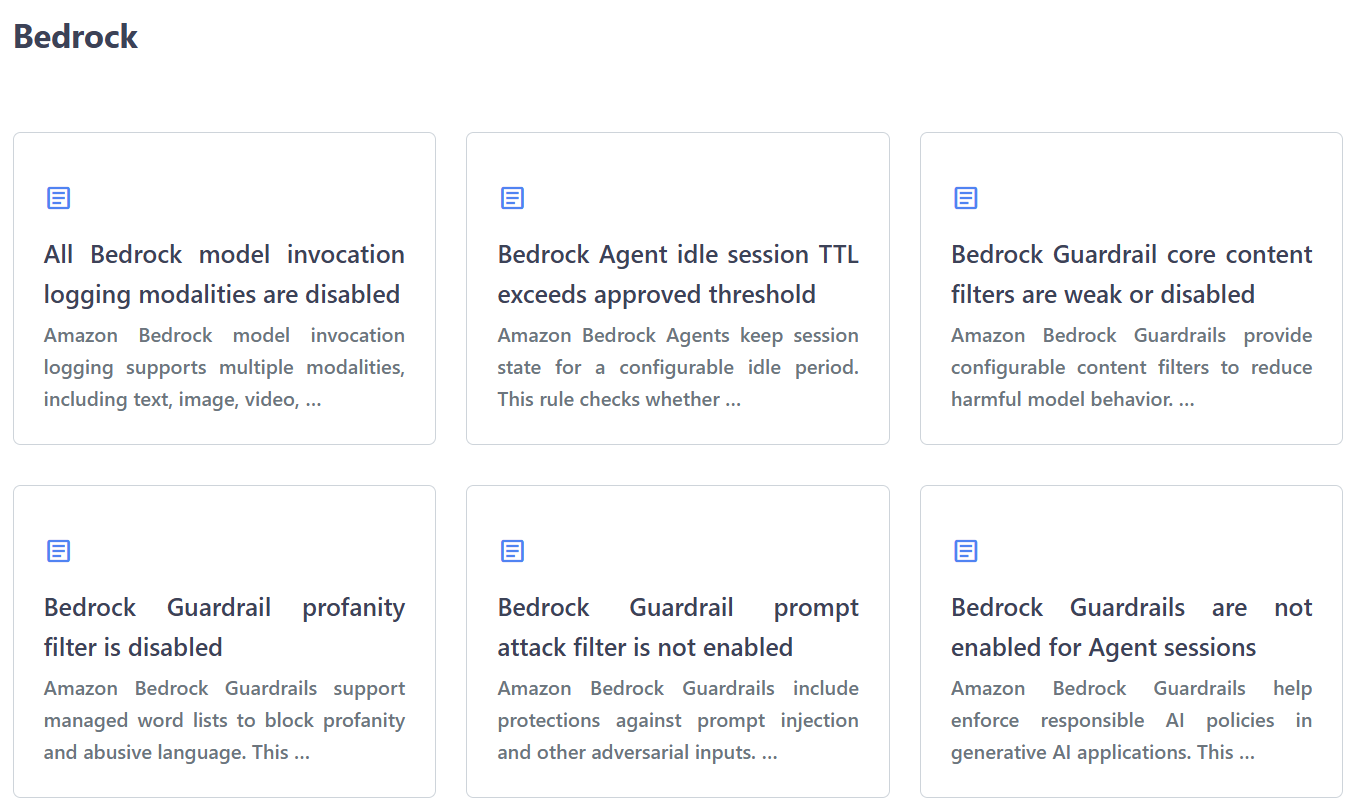
- AI Posture Checks for AWS, GCP, Azure, and OCI.
- Visible mode for following organizations you want to send questionnaires.
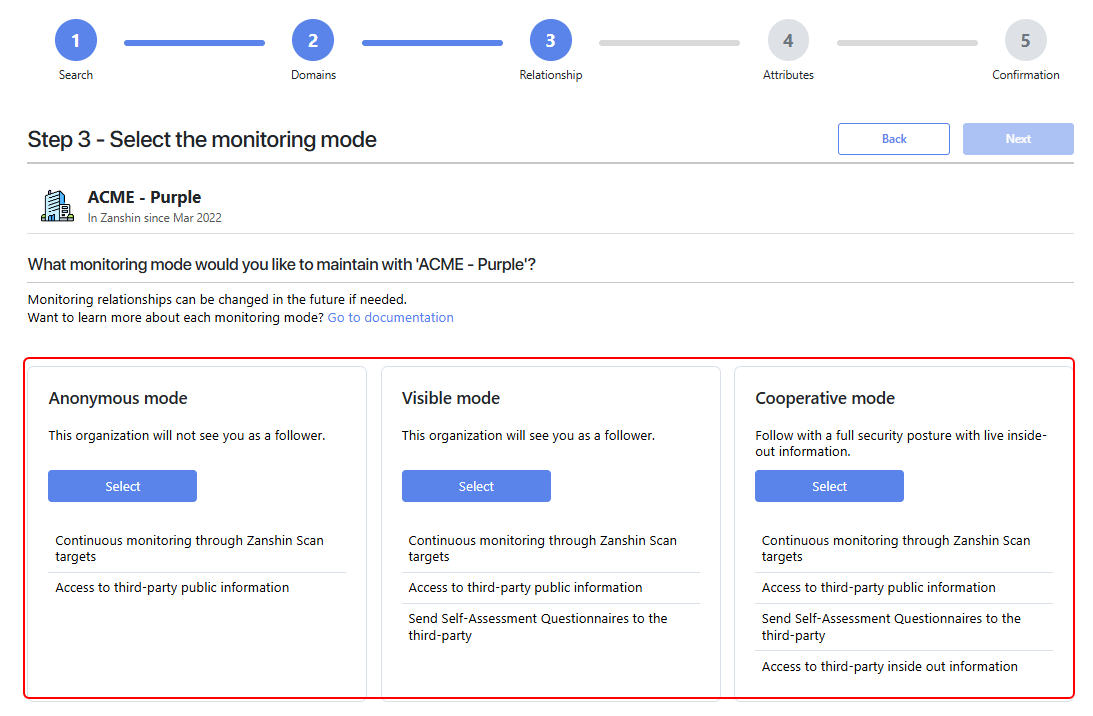
- New Scan Target types
Added support for “Azion Web Platform“ and “Jamf Pro” expanding the range of platforms and services Zanshin can continuously monitor.
In the “Scan Targets Dashboard“ page, locate the “IaaS | PaaS” section to find “Azion Web Platform” and “Security Tools” section to find “Jamf Pro”.
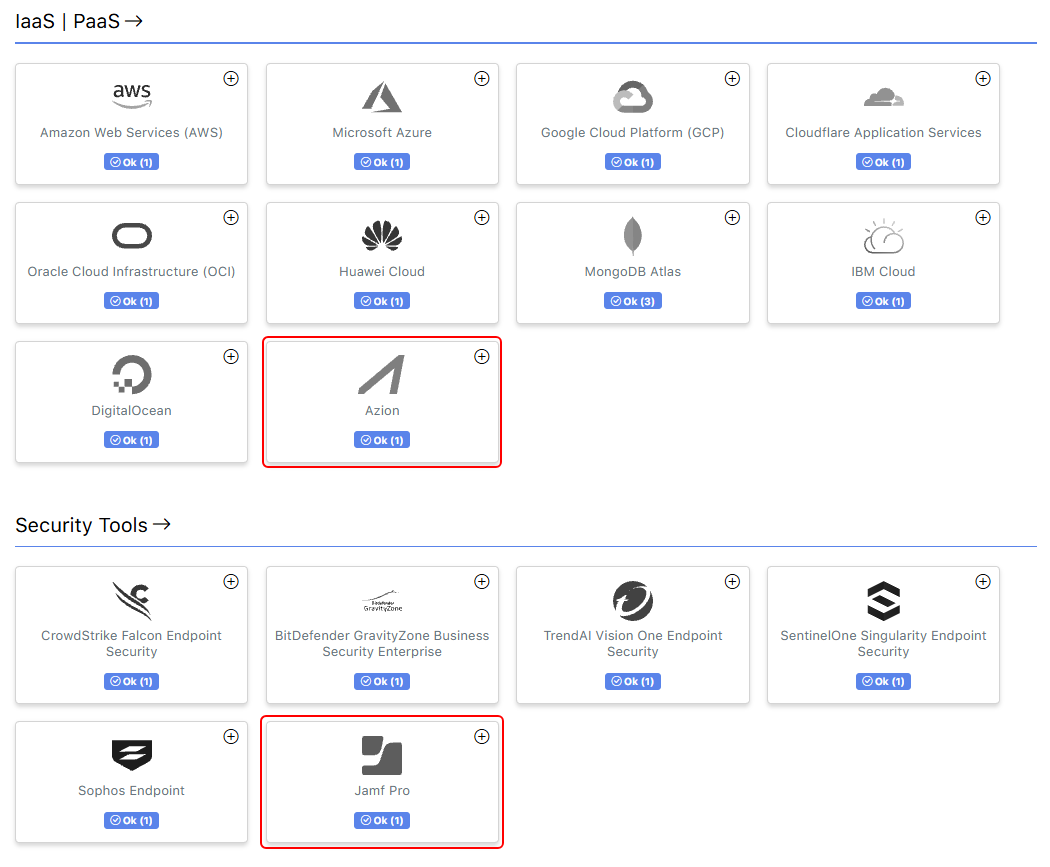
For more information, see: Azion Web Platform - Scan Target Registration and Jamf Pro - Scan Target Registration.
4. Broader and More Reliable Attack Surface Scanning
We have upgraded Zanshin’s ASM scanning pipeline to support large-scale digital perimeters with improved consistency and automated asset identification.
- High-Capacity Parallel Scanning: Replaced sequential execution limits with a distributed architecture, enabling complete coverage of complex attack surfaces without timeouts or dropped endpoints.
- Scan Consistency & Score Stability: Eliminates partial-scan discrepancies and alert flip-flops, ensuring predictable findings and dependable risk scoring across scan cycles.
- Automated Domain Discovery: Zanshin now proactively discovers unmapped regional, legacy, or brand-related domains associated with your organization, even if they were never registered manually.
- Target Addition Alerts: Receive automated notifications whenever newly discovered domains are identified and added to your active scanning scope.
5. Score Calculation Refinement
We have refined Zanshin’s scoring methodology to ensure your risk ratings reflect real security improvements in real time, removing friction and reward-lag for proactive security teams.
- Accelerated Remediation Recognition: Resolved alerts now boost your score much faster. Instead of waiting for prolonged calculation cycles, your score dynamically updates as remediation tasks are completed and verified, giving immediate credit to proactive teams.
- Built-in Grace Period for Triage: Newly discovered findings now come with a short buffer window before impacting your overall score. This provides security and engineering teams the necessary breathing room to review, prioritize, and remediate emerging risks before their ratings fluctuate.
- Balanced & Defensible Posture: By smoothing out artificial volatility while accelerating positive progress, third parties and internal teams get a dependable metric that rewards responsiveness without penalizing initial discovery.